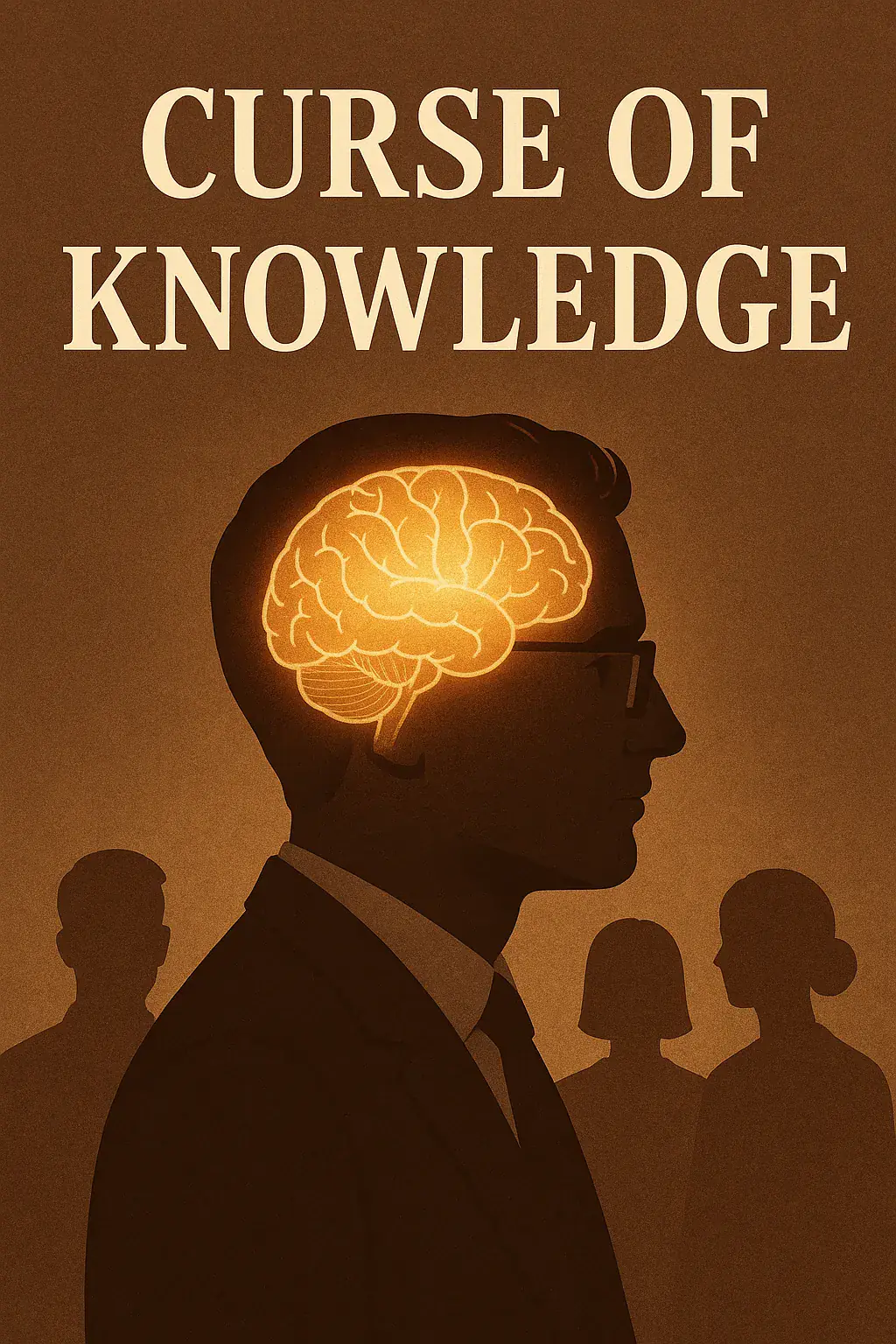
An exploration of how expertise can unintentionally block empathy, communication, and understanding.
The curse of knowledge refers to a psychological phenomenon in which individuals possessing expertise or information struggle to comprehend the perspective of those lacking the same knowledge. This curse, while often unrecognized, can have unintended consequences, particularly in the realms of communication and empathy. It overwhelms us by hindering effective communication, fostering assumptions and biases, and impeding our ability to connect with others. Reflecting upon the curse of knowledge prompts us to question the limitations of our understanding, the assumptions we make, and the empathy we extend to those with less knowledge.
Firstly, the curse of knowledge inhibits effective communication. When we possess specialized knowledge or expertise, we often struggle to communicate ideas clearly to those who lack the same level of understanding. We unintentionally use jargon, technical terms, or complex explanations that alienate the listener. This knowledge gap can lead to frustration, misinterpretation, and a breakdown in communication. The more we know, the harder it becomes to convey information in a relatable and accessible manner, limiting our ability to connect with others effectively.
Secondly, the curse of knowledge fosters assumptions and biases. Once we possess certain knowledge, it is difficult to imagine a time when we didn’t have it. This cognitive bias blinds us to the fact that others may not share our knowledge or perspective. We may assume that everyone knows what we know, leading to misunderstandings, frustration, and even conflict. These assumptions can create a barrier between us and others, hindering collaboration, empathy, and the exchange of ideas.
Thirdly, the curse of knowledge diminishes our capacity for empathy. When we have a deep understanding of a subject, we tend to forget what it was like to be ignorant of that knowledge. This lack of empathy prevents us from relating to the struggles, questions, and challenges faced by those with less knowledge. We may become impatient, dismissive, or condescending, disregarding the genuine efforts of others to learn or understand. Our inability to connect empathetically can strain relationships and limit our growth as individuals.
In closing, the curse of knowledge can overwhelm us by impeding effective communication, fostering assumptions and biases, and diminishing our capacity for empathy. Recognizing this curse is the first step toward mitigating its negative effects. By humbly considering others’ perspectives, communicating clearly and inclusively, challenging our assumptions, and cultivating empathy, we can alleviate the burden of knowledge and foster meaningful connections with others. How can we actively combat the curse of knowledge in our interactions and strive for greater understanding and empathy? By embracing humility, striving for clarity in communication, challenging our assumptions, and cultivating empathy, we can alleviate the burden of knowledge and foster meaningful connections with others.